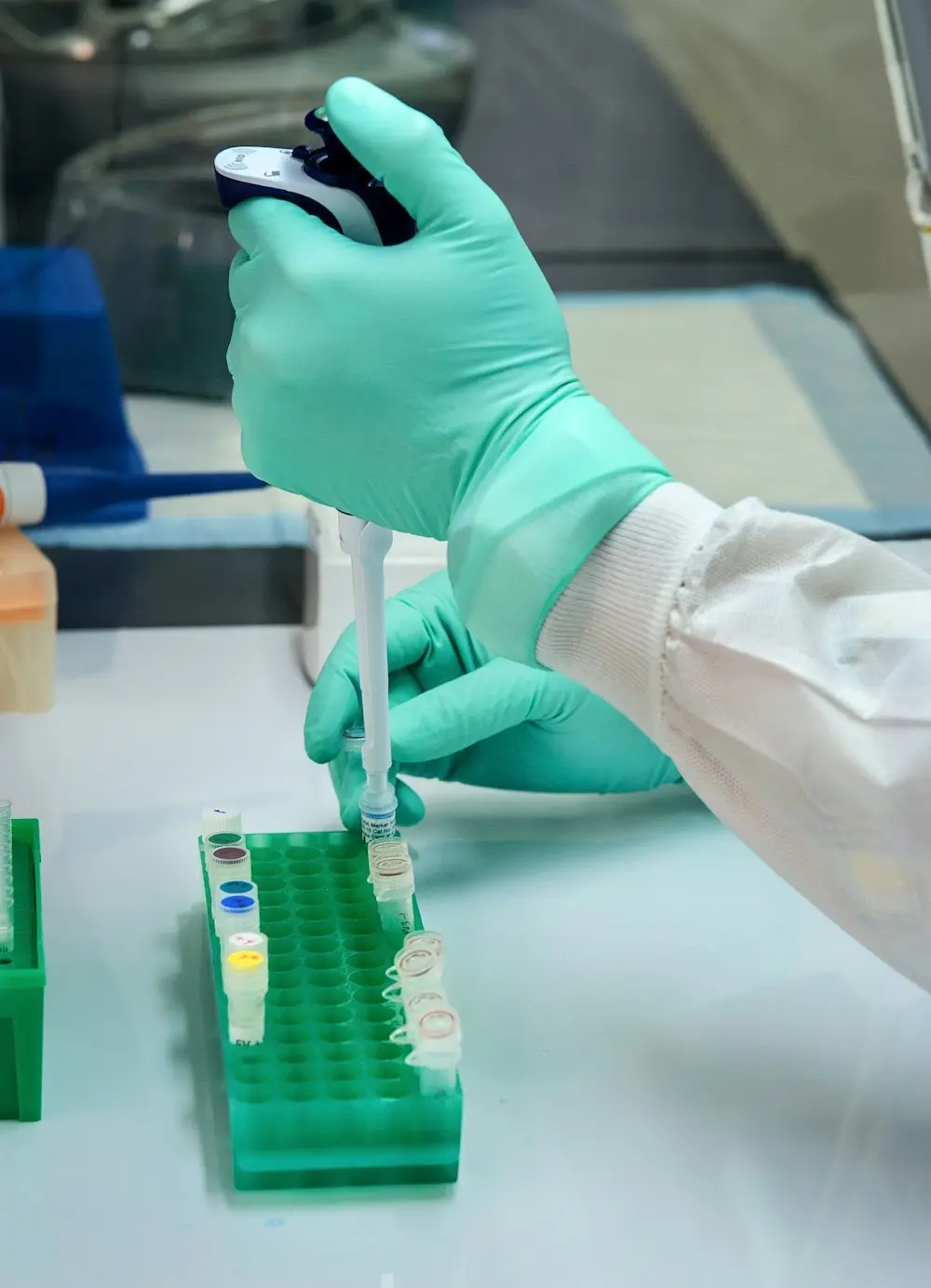
Among the limits on what ibogaine research can tell anyone, one is rarely mentioned and is arguably the most consequential: almost all of it was done before fentanyl took over the illicit opioid supply. The case series that established ibogaine's reputation for interrupting withdrawal enrolled people dependent on heroin and on methadone. Fentanyl and its analogues behave differently enough that findings from those populations cannot simply be carried across.
A 2026 review of emerging treatments for opioid use disorder states the position directly: ibogaine has the largest evidence base of any psychedelic in this area, and that evidence is limited and largely predates the fentanyl era [1]. That is not a minor caveat about generalisability. It means the specific question most people now searching are asking has not been studied.
The gap in one sentence
There is no published study of ibogaine in people whose primary opioid is fentanyl that would allow any statement about whether it works as well, less well, or differently. What exists is a body of observational work in heroin and methadone dependence, plus a pharmacological reason to expect fentanyl to complicate matters.
What the studies were actually treating
The largest inpatient case series enrolled 191 people at a facility in St Kitts, of whom 102 were opioid dependent and 89 cocaine dependent. Opioid-dependent participants were switched to oral morphine on admission before receiving a single oral ibogaine dose of 8 to 12 milligrams per kilogram [2]. The relevant point is the morphine substitution: participants were stabilised on a short-acting opioid of known potency before dosing, which is a controlled starting condition that bears little resemblance to someone arriving with an unpredictable fentanyl exposure.
The New Zealand observational study followed 14 adults, of whom 71 percent were on methadone maintenance, treated by two legal providers with staggered oral doses totalling 25 to 55 milligrams per kilogram over 24 to 96 hours [3]. Again the population is defined by a long-acting prescribed opioid, not by fentanyl.
A Dutch study at a university psychiatry department enrolled 14 adults with opioid use disorder who were on maintenance treatment and had not reached abstinence with standard care. They too were switched to morphine before receiving a single 10 milligram per kilogram dose of ibogaine hydrochloride, under monitoring for at least 24 hours [8]. Across the literature the pattern holds: the opioid being interrupted was heroin, morphine or methadone, in an era when the illicit supply was comparatively predictable and the pre-treatment exposure could be substituted with a known quantity of a known drug.
That substitution step is easy to overlook and worth dwelling on. In the two largest supervised series, nobody was dosed while still carrying their street opioid. They were transferred onto a pharmaceutical opioid first, which stabilises the withdrawal timeline and makes the moment of dosing predictable. A treatment pathway that cannot perform that step, because the person's recent exposure is unknown, is operating under conditions the research did not test.
Why fentanyl is a different problem
Several properties of fentanyl bear on this. It is far more potent by weight than heroin or morphine, so tolerance develops to much higher opioid-receptor occupancy. It is highly lipophilic, which means it distributes into body fat and can be released back into the bloodstream over an extended period after use stops, producing a withdrawal course that is reported clinically as both delayed in onset and prolonged compared with heroin. The illicit supply is also variable in concentration and often contains additional substances, so the exposure preceding any treatment is less well characterised than in the older studies.
Each of those features matters for a single-dose intervention. Ibogaine's acute effects run over roughly a day, with its metabolite persisting longer. If fentanyl withdrawal begins later and lasts longer, the overlap between the treatment window and the withdrawal course is different from what the older studies observed, and whether a single dose covers it is an empirical question nobody has answered in published work.
There is a second consideration. Ibogaine carries a documented cardiac risk, and the degree of QT prolongation varies between individuals. A person arriving with an uncertain recent opioid history, possible exposure to adulterants, and the physiological strain of a prolonged withdrawal is not in the same pre-treatment condition as a patient stabilised on morphine in an inpatient unit with telemetry. That difference acts on the risk side of the calculation, not only the benefit side.
If something here speaks to your situation, the next step is a five-minute provider match profile. We read it personally, take your case to vetted providers, and come back with the ones who say yes — or tell you honestly if ibogaine is not the answer.
Find a providerWhat the older studies found
Taken on their own terms, the pre-fentanyl findings were consistent. In the St Kitts series, physician-rated objective withdrawal scores were significantly lower at 36 hours after dosing, and craving scores fell both at discharge and at one month. The authors reported no serious adverse events and no deaths in that series, with nausea, vomiting and unsteady gait as the common side effects [2].
In the New Zealand cohort, subjective withdrawal scores fell from 25.2 to 14.2 within 12 to 24 hours, and a composite measure of drug use fell over 12 months in the eight participants who completed every interview. One participant died during treatment. The coroner found no significant cardiac pathology but judged the death very likely related to ibogaine ingestion and most probably to a cardiac arrhythmia, and the provider was found to have breached its duty of care [3].
The Dutch series is the most instructive on what a single dose does physiologically, because it was closely instrumented. Maximum QT prolongation averaged 95 milliseconds, with a range from 29 to 146, and 7 of the 14 participants passed 500 milliseconds. In 6 of 14, a QT interval above 450 milliseconds persisted beyond 24 hours. No torsades de pointes occurred. Severe transient ataxia, leaving participants unable to walk unaided, affected all 14. On the withdrawal question, 11 of 14 did not return to morphine within 24 hours [8].
Two things follow from those numbers. The withdrawal effect was real and measurable in a monitored setting with careful exclusions, which included a pre-treatment QT ceiling, potassium within a defined range, and no QT-prolonging or CYP2D6-affecting drugs. And the cardiac effect was not marginal: half the group crossed a threshold that would prompt intervention in any hospital, and in nearly half the group the abnormality outlasted the first day, which has implications for how long monitoring needs to continue.
Both the St Kitts and New Zealand studies lacked control groups. A 2026 review covering human ibogaine research from 1990 to early 2025 concluded that most positive efficacy data come from uncontrolled, open-label or retrospective studies, many in nonclinical settings, and that no double-blind randomised trial has shown ibogaine or noribogaine effective for opioid use disorder [4].
The tolerance problem after any detox
One finding from the general opioid literature applies with particular force to fentanyl, and it is uncomfortable. Completing a detoxification lowers tolerance, and lowered tolerance raises the lethality of a return to use. In a London cohort of 137 people in a 28-day inpatient detoxification programme, three of the five deaths within a year were overdoses occurring within four months, and all three were in the group that had completed detox and lost tolerance. There were no deaths among those who did not complete [5].
Meta-analysis of opioid agonist treatment points the same way from a different angle: all-cause mortality during treatment is roughly half the rate out of it, and in the four weeks after treatment stops the rate is about six times higher than during the remainder of time in treatment [6]. Any intervention that ends opioid tolerance, ibogaine included, sits inside that pattern.
With fentanyl, the margin for error after tolerance is lost is narrower than with heroin, because small variations in the potency of what is obtained translate into large variations in dose. This is the single most important practical point in this entry, and it concerns what happens after treatment rather than during it.
What is known about fentanyl specifically
Very little, in published form. The 2026 review identifies the pre-fentanyl character of the evidence as a field-wide limitation and calls for trials with active comparators, formal blinding checks and blinded objective endpoints [1]. It also notes that the only placebo-controlled randomised trial in this area evaluated noribogaine as a safety study in methadone-stabilised patients, found dose-dependent QT prolongation, and was not designed to assess withdrawal at all [1].
One inference can be drawn without new research, and it concerns duration rather than effectiveness. If a QT interval above 450 milliseconds persisted past 24 hours in 6 of 14 closely screened patients [8], and if fentanyl withdrawal is reported clinically to run longer than heroin withdrawal, then a treatment aimed at fentanyl would need both cardiac monitoring and withdrawal management extending further than the schedules used in the older studies. That is a question about the adequacy of a given setting, and it is answerable in advance by asking how long monitoring continues.
Reports from providers treating fentanyl-dependent clients exist, but they are not published studies, carry no independent verification and no systematic follow-up, and cannot be weighed against the research literature. Treating them as evidence of equivalent standing would be a mistake regardless of how they read.
How to read provider claims
A specific claim about fentanyl deserves a specific question: on what observations does it rest, how many people, followed for how long, and recorded how. A general reference to the ibogaine literature does not answer it, because that literature is about other opioids. There are three medications the FDA has approved for opioid use disorder, buprenorphine, methadone and naltrexone [7], and the mortality evidence for agonist treatment is the strongest in the field [6]. That comparison belongs in any honest discussion of options, whatever conclusion someone reaches.
Frequently asked questions
Has ibogaine been studied in fentanyl users?
Not in published research that would support a conclusion. A 2026 review states that the ibogaine evidence base for opioid use disorder largely predates the fentanyl era [1]. The main case series worked with people dependent on heroin, morphine or methadone [2] [3].
Does fentanyl's long half-life in tissue change the picture?
It plausibly does, because fentanyl is lipophilic and reported clinically to produce a later and longer withdrawal course than heroin, while ibogaine's acute effect runs over about a day. Whether a single dose covers that course has not been tested in published work.
Is the risk higher after ibogaine with fentanyl?
The risk after any detoxification is the loss of tolerance, which is documented: overdose deaths after inpatient detox clustered in those who completed it [5], and mortality rises about six-fold in the four weeks after agonist treatment stops [6]. Fentanyl's potency and variability make that margin narrower.
What would settle the question?
A controlled trial in a fentanyl-dependent population with an active comparator, blinding checks and objective endpoints, which is what the 2026 review calls for [1].
Why does the morphine substitution in the studies matter?
Because it means the research tested ibogaine against a known, stabilised opioid exposure rather than an unknown one. Participants in the St Kitts and Dutch series were switched to morphine before dosing [2] [8], which fixes the withdrawal timeline in a way that is not possible when the recent exposure is an illicit supply of uncertain potency and uncertain composition, which is the normal situation in the fentanyl era.
References
- Shen MR, Owusu-Boaitey K, Murphy ZD, Rains AN, Wang PR, Zhou DW, Suzuki J. 2026, Front Psychiatry 17:1909149. doi:10.3389/fpsyt.2026.1909149. PMID 42755825. PMC13581858. frontiersin.org/journals/psychiatry/articles/10.3389/fpsyt.2026.1909149/full
- Mash DC, Duque L, Page B, Allen-Ferdinand K. 2018, Front Pharmacol 9:529. frontiersin.org/journals/pharmacology/articles/10.3389/fphar.2018.00529/full
- Noller GE, Frampton CM, Yazar-Klosinski B. 2018, Am J Drug Alcohol Abuse 44(1):37-46. doi.org/10.1080/00952990.2017.1310218
- Kervadec E, Bezo A, Serreau R, et al. 2026, J Clin Psychopharmacol. doi:10.1097/jcp.0000000000002197. PMID 42228481. doi.org/10.1097/jcp.0000000000002197
- Strang J, McCambridge J, Best D, Beswick T, Bearn J, Rees S, Gossop M. 2003, BMJ 326(7396):959-960. doi:10.1136/bmj.326.7396.959. PMID 12727768. PMC153851. pmc.ncbi.nlm.nih.gov/articles/PMC153851/
- Santo T Jr, Clark B, Hickman M, et al. 2021, JAMA Psychiatry 78(9):979-993. doi:10.1001/jamapsychiatry.2021.0976. PMID 34076676. PMC8173472. pmc.ncbi.nlm.nih.gov/articles/PMC8173472/
- US Food and Drug Administration. "Information about Medications for Opioid Use Disorder (MOUD)". Content current as of 12/26/2024. fda.gov/drugs/food-and-drug-administration-overdose-prevention-framework/information-about-medications-opioid-use-disorder-moud
- Knuijver T, Schellekens A, Belgers M, et al. 2022, Addiction 117(1). doi:10.1111/add.15448. PMC9292417. europepmc.org/article/PMC/PMC9292417