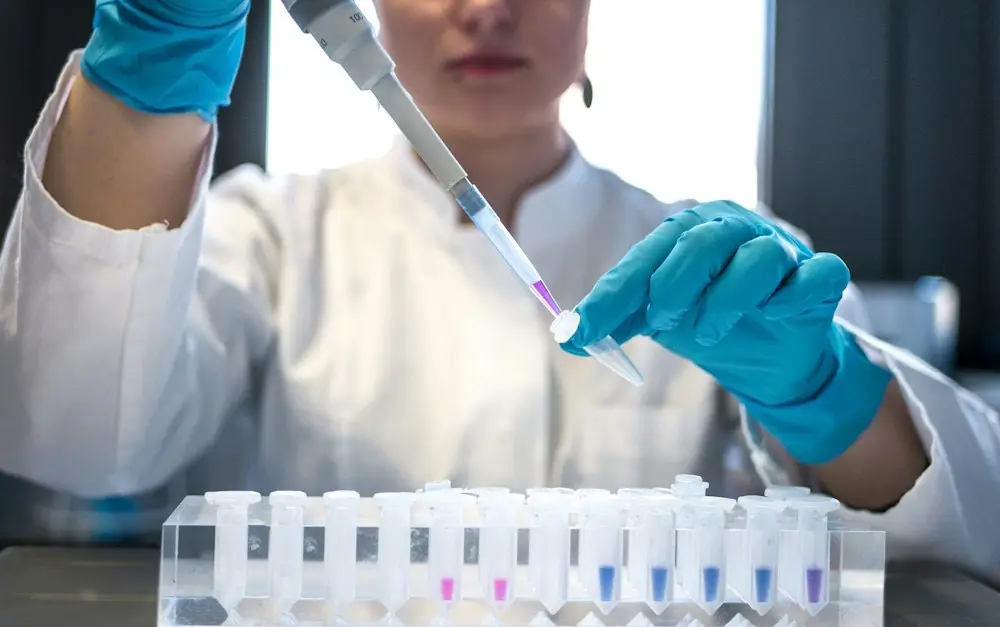
A question that rarely gets asked, and that bears directly on what a person actually receives, is where the ibogaine came from. The answer is less obvious than the ethnographic framing suggests: most ibogaine in circulation is not extracted from the iboga plant at all. It is manufactured from a different species, and a fully synthetic route now exists.
The production route is not a trivia question. It determines what impurities are present, whether the dose on a label corresponds to the quantity of ibogaine delivered, and whether a given batch resembles the material used in the published studies. For a compound with a narrow margin between a treatment exposure and a dangerous one, that is a safety matter rather than a technical aside.
Three routes to the same molecule
There are three ways to obtain ibogaine. It can be extracted from the root bark of Tabernanthe iboga, where it occurs naturally. It can be semi-synthesised from a related alkaloid obtained from a more abundant plant. Or it can be built from simple chemical starting materials by total synthesis. All three yield the same molecule when done well, and they differ in cost, scale, environmental impact and the impurity profile they leave behind.
Historically the second route has dominated commercial production. The first is limited by the plant. The third has only recently become practical at scale.
A fourth category exists in practice and belongs in none of the three: material of unknown origin. Ibogaine sold without documentation may have been produced by any of these routes, or may be an extract sold as a purified compound, and there is no way to determine which from its appearance. The physical description in the original 1901 report, white crystals melting at a specific temperature [4], is a laboratory identification rather than something assessable by eye.
Extraction from iboga
Ibogaine was first obtained this way. In 1901 Haller and Heckel reported crystalline material from root bark, describing clean white orthorhombic crystals melting at 152 degrees Celsius, insoluble in water but soluble in alcohol, ether and chloroform [4]. Those properties still describe the purified compound.
The constraint is abundance. Ibogaine makes up roughly 0.3 percent of iboga root bark by weight [1], with a later paper giving about 0.3 to 0.4 percent [2]. At that concentration, a single treatment-sized dose of several hundred milligrams requires on the order of a hundred grams of root bark before any loss in processing, and harvesting root bark damages or kills the plant.
Iboga is also not an ordinary crop. A 2026 review notes the species is endemic to Central Africa and traditionally used in Bwiti ritual practice, with root bark the main source [3]. Extraction at commercial scale therefore competes with cultural use of a plant with a restricted range, which is both an ethical and a practical limit on this route.
Extraction also produces the least defined product. Root bark contains several iboga alkaloids, and how thoroughly ibogaine is separated from the others depends entirely on the process used. A crude extract and a purified hydrochloride salt are different materials with different compositions.
Semi-synthesis from voacangine
The commercial solution has been to start from a different plant. Voacangine, a closely related alkaloid, makes up roughly 1.7 percent of the root bark of Voacanga africana, a more abundant tree, and ibogaine is often produced by semi-synthesis from it [1]. A later paper gives voacangine as about 1 percent of that bark [2].
The conversion takes two steps: saponification, which removes an ester group, followed by decarboxylation, which removes the resulting carboxylic acid as carbon dioxide [1]. Two steps from a starting material five times more concentrated in a more plentiful tree is a substantially better proposition than extracting from iboga directly, which is why this route became standard.
The consequence worth noting is that the supply chain for clinical and commercial ibogaine runs largely through Voacanga africana rather than through the plant in the ethnographic literature. Material described as plant-derived is usually derived from that plant, not from iboga.
If something here speaks to your situation, the next step is a five-minute provider match profile. We read it personally, take your case to vetted providers, and come back with the ones who say yes — or tell you honestly if ibogaine is not the answer.
Find a providerOne practical consequence of the semi-synthetic route concerns impurities. Starting from voacangine and carrying out two reactions leaves the possibility of unreacted starting material, intermediate from an incomplete second step, and alkaloids carried through from the original extraction. None of these is necessarily hazardous, and all of them mean the contents of a batch depend on how carefully the chemistry and the subsequent purification were performed. The relevant difference between a pharmaceutical-grade preparation and an informally produced one lies largely here.
Cost also shapes what reaches people. A route with a cheaper starting material and fewer steps produces cheaper material, and ibogaine is bought and sold in markets with little quality enforcement. Where price pressure exists and testing is absent, the incentive runs toward less thorough purification rather than more, which is the general reason certificates of analysis matter for any compound in this position.
Total synthesis
Building ibogaine from simple chemicals was long impractical. Earlier syntheses ran to between nine and fifteen steps with yields between 0.14 and 4.61 percent, and none was scalable [2]. A route with a one percent yield over a dozen steps is a demonstration of chemical skill rather than a manufacturing method.
That changed in 2025 with a reported gram-scale, seven-step synthesis of ibogaine from pyridine, using low-cost and readily available starting materials. The same work produced three further iboga alkaloids and four new analogues [2].
Gram scale and seven steps from an inexpensive feedstock is the threshold at which synthesis becomes a genuine alternative to agriculture. If adopted, it would remove harvesting pressure from both plants, make purity a controlled parameter rather than a consequence of extraction, and decouple supply from growing conditions in a particular region. Whether it displaces semi-synthesis is an economic question, and the route's existence does not mean material in circulation today was made this way.
The mirror-image finding
The same synthesis work produced a result that illuminates the molecule itself. It included the first enantioselective synthesis of (+)-ibogaine, the mirror image of the natural form, and found that the unnatural (+)-ibogaine lacked ibogaine-like effects on cortical neuron growth [2].
Many molecules exist in two mirror-image forms with identical composition and different three-dimensional arrangement, and biological targets commonly recognise one and not the other. Finding that the mirror image is inactive in a neuron growth assay confirms that ibogaine's effects depend on its specific shape fitting specific sites, rather than on some general property of the chemical class. It also means a synthetic route has to produce the correct form, which is a real constraint on manufacture rather than a detail.
Why purity and form matter
Purified ibogaine is handled as a hydrochloride salt, which dissolves more readily than the free base and allows a measured dose in a capsule. The free base is insoluble in water [4], which matters for how a preparation behaves and for how reliably it is absorbed.
The distinction that matters most in practice is between purified ibogaine hydrochloride and total alkaloid extract. The published studies that define what is known used purified ibogaine hydrochloride at a measured dose per kilogram, as in the Dutch cohort dosed at 10 milligrams per kilogram [6]. Total alkaloid extract contains other iboga alkaloids in uncontrolled proportions, so a stated weight of extract does not correspond to a known quantity of ibogaine.
Given how much individual variation already exists in how people clear the drug, with CYP2D6 genotype alone driving a more than tenfold spread in clearance [6], adding uncertainty about how much ibogaine was in the dose compounds a problem that is already difficult to manage.
There is a second reason the preparation question bears on safety specifically. The cardiac effect depends on the concentration of ibogaine reached in the blood, which depends on how much ibogaine was administered. An extract whose ibogaine content is unknown breaks the only link between a calculated dose and a predicted exposure. A person can be dosed carefully by weight and still receive substantially more or less of the active compound than the calculation assumed, in either direction.
The standardisation problem
This is recognised in the literature as a structural weakness of the field. The 2026 scoping review lists the absence of product standardisation alongside inconsistent dosing regimens, unharmonised outcome measures and the lack of systematic long-term follow-up as limitations that more naturalistic reports cannot resolve [3]. It also notes that no authorised medicinal products containing ibogaine exist in the European Union [3], which means there is no regulator-enforced specification for what a batch must contain.
The review suggests how standardisation could be approached, through marker-based quantification of ibogaine combined with chromatographic fingerprinting of the alkaloid profile [3]. That is a description of analytical methods available today. The obstacle is not technical capability but the absence of any requirement that it be done.
What this means in practice
Three questions follow and all are answerable. Whether the material is purified ibogaine hydrochloride or a total alkaloid extract, since these are different preparations and only the first matches the research. Whether a certificate of analysis exists for the specific batch, stating ibogaine content and identifying other alkaloids present. And what the production route was, since that determines which impurities to expect.
A provider who can answer those questions is working with a defined material. One who cannot is administering a large single dose of a compound with a documented cardiac effect [5] without knowing precisely how much of it is in the capsule.
It is worth being clear that this is a gap in the field rather than an accusation against any particular provider. Without an authorised product there is no pharmacopoeial monograph setting limits on content and impurities, no inspection regime verifying that a manufacturer meets them, and no batch release process. Those systems are what make a dose of an approved medicine a known quantity, and for ibogaine they do not exist. Testing and documentation are consequently voluntary, which means their presence or absence is informative about a provider's practice.
Frequently asked questions
Does ibogaine come from the iboga plant?
Usually not directly. It is often semi-synthesised from voacangine, obtained from the root bark of the more abundant Voacanga africana, in two chemical steps [1].
How much root bark would a dose require?
Ibogaine is roughly 0.3 percent of iboga root bark by weight [1], so a dose of several hundred milligrams corresponds to on the order of a hundred grams of bark before processing losses.
Can ibogaine be made entirely synthetically?
Yes. A gram-scale, seven-step synthesis from pyridine using low-cost starting materials was reported in 2025 [2]. Earlier routes ran to nine to fifteen steps with yields under five percent and were not scalable.
Why does the mirror-image result matter?
Because it shows the effects depend on the molecule's three-dimensional shape rather than its composition alone. Synthetic (+)-ibogaine, the mirror image of the natural form, lacked ibogaine-like effects on cortical neuron growth [2], so any manufacturing route has to deliver the correct form.
Is total alkaloid extract equivalent to ibogaine?
No. Extract contains other iboga alkaloids in uncontrolled proportions, whereas the published studies used purified ibogaine hydrochloride at measured doses [6].
References
- Iyer RN, Favela D, Zhang G, Olson DE. 2021, Nat Prod Rep 38(2):307-329. doi:10.1039/d0np00033g. PMID 32794540. PMC7882011. europepmc.org/article/PMC/PMC7882011
- Iyer RN, Favela D, Domokos A, et al., Olson DE. 2025, Nat Chem 17(3):412-420. doi:10.1038/s41557-024-01714-7. PMID 39915657. PMC11952118. europepmc.org/article/PMC/PMC11952118
- Esperanca MP, Gomes NGM, Campos MG. 2026, Molecules 31(3):545. doi:10.3390/molecules31030545. PMID 41683522. PMC12899015. europepmc.org/article/PMC/PMC12899015
- Haller A, Heckel E. 1901, Comptes rendus hebdomadaires des seances de l'Academie des sciences (Paris) 133:850-853. samorini.it/doc1/alt_aut/ek/haller-heckel-sur-l-ibogine-principe-actif-d-une-plante-du-genre-tabernaemontana-originaire-du-congo.pdf
- Koenig X, Hilber K. 2015, Molecules 20(2):2208-2228. doi:10.3390/molecules20022208. PMC4382526. mdpi.com/1420-3049/20/2/2208
- Knuijver T, ter Heine R, Schellekens AFA, et al. 2024, J Psychopharmacol 38(5):481-488. doi:10.1177/02698811241237873. PMID 38519421. PMC11102648. europepmc.org/article/PMC/PMC11102648