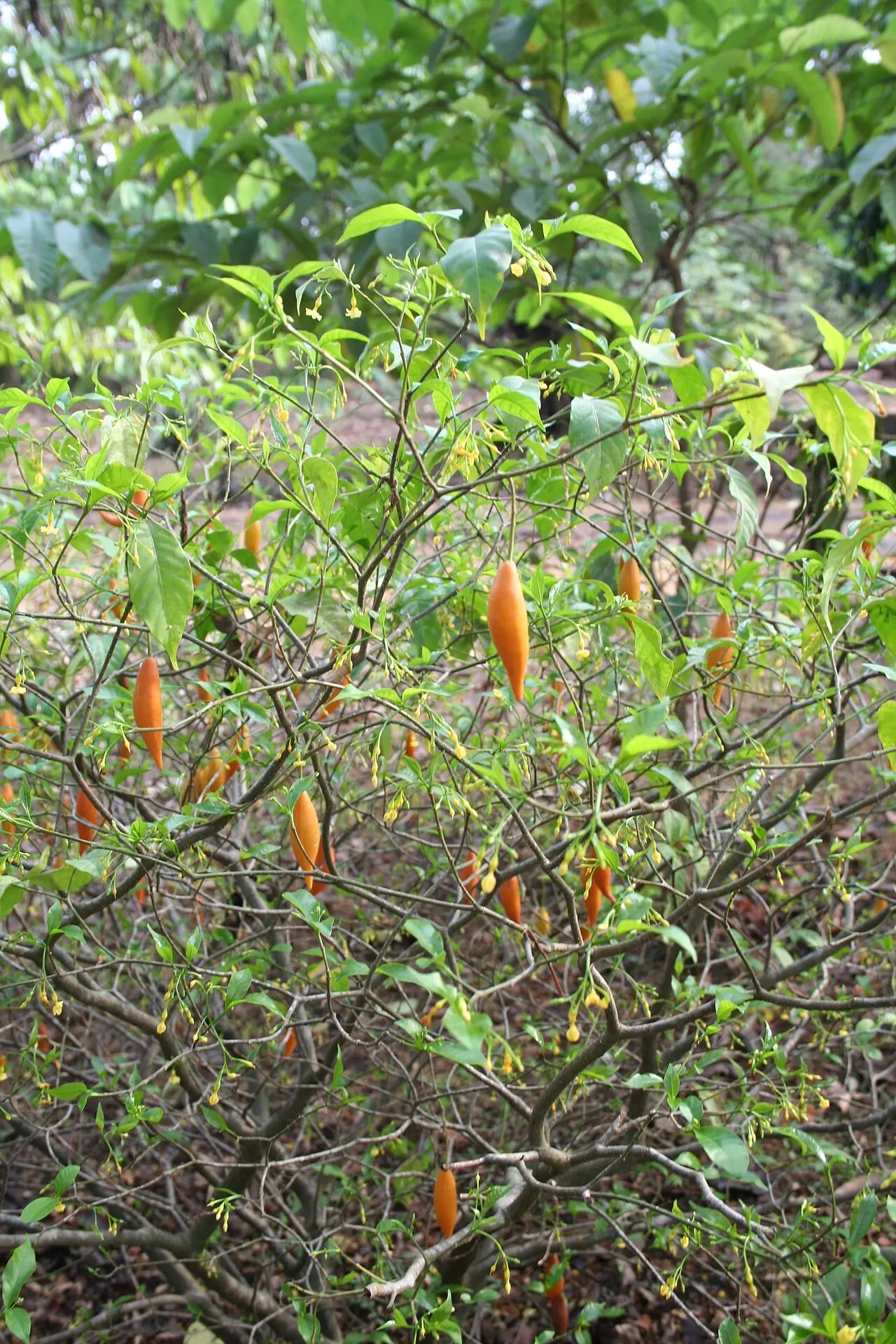
Ibogaine is a naturally occurring alkaloid found in the root bark of a West African shrub. It is studied mainly as a single-dose treatment for opioid withdrawal, and it is the subject of a large amount of claim and counter-claim, much of which runs ahead of what has actually been measured. The purpose of this entry is narrow: to say what the substance is, where it comes from, what is reliably known about its effects, and where the knowledge stops.
Two facts shape everything else about it. The first is that ibogaine has a well-documented effect on the electrical behaviour of the heart, which is why supervised treatment involves cardiac monitoring rather than being an optional extra. The second is that most of the human evidence for its benefits comes from studies without control groups, which limits how strongly any conclusion about effectiveness can be drawn.
The short answer
Ibogaine is an indole alkaloid produced by the plant Tabernanthe iboga, a shrub native to Central Africa. In its isolated form it is a white crystalline solid. Taken by mouth in a single large dose, it produces a long psychoactive state lasting roughly a day, followed by several days of altered sleep and reduced energy. Interest in it as a medical treatment rests on repeated observations that opioid withdrawal symptoms fall sharply during and after that dose, in a way that other single-dose interventions do not achieve.
It is not an approved medicine in the United States or the European Union, and it has a known cardiac risk that has been linked to deaths in unsupervised settings. Those two statements sit alongside the observational findings, not in place of them.
The molecule itself
Chemically, ibogaine belongs to a family called the iboga alkaloids, built on an indole core fused to an isoquinuclidine ring system. The structure matters less than one of its consequences: the molecule is lipophilic, meaning it dissolves readily in fat rather than water. Pure ibogaine is insoluble in water but dissolves in alcohol, ether and chloroform, a property noted in the original isolation report [2]. In practice the compound is usually handled as a hydrochloride salt, which dissolves more readily and allows a dose to be given as a capsule.
Once in the body, ibogaine is converted by liver enzymes into a second compound, noribogaine, which stays in circulation far longer than ibogaine itself. That means a single dose produces two distinct exposures: a short, intense one from ibogaine and a long, low one from its metabolite. A good deal of the argument about how ibogaine works turns on which of those two is responsible for which effect, and that question is not settled [1].
Ibogaine also binds to an unusually wide range of targets in the nervous system. A 2019 review in Frontiers in Pharmacology lists nicotinic acetylcholine receptors, NMDA receptors, kappa and mu opioid receptors, two serotonin receptor subtypes, and the dopamine and serotonin transporters, all at micromolar concentrations [1]. Binding to a receptor, though, only shows that the molecule attaches to it. It does not establish that the attachment causes any particular effect, and the same review states plainly that the mechanism behind ibogaine's effect on drug-seeking behaviour remains unresolved [1].
Where ibogaine comes from
The source plant is Tabernanthe iboga, endemic to Central Africa and used in Bwiti ritual practice in Gabon and neighbouring countries, where the root bark is the main material [3]. Ibogaine is only one of several alkaloids in that bark, and it is present in modest quantity: roughly 0.3 percent of root bark by weight [4]. Extracting a treatment-sized dose directly from the plant therefore consumes a substantial amount of root, which has consequences for both cost and conservation.
For that reason most ibogaine in circulation is not extracted from iboga at all. It is semi-synthesised from voacangine, a related alkaloid that makes up about 1.7 percent of the root bark of Voacanga africana, a more abundant tree. Converting voacangine to ibogaine takes two chemical steps, saponification followed by decarboxylation [4]. The practical result is that the supply chain for ibogaine runs through a different plant from the one in the ethnographic literature, and that the purity and alkaloid profile of a given batch depend entirely on how carefully it was made.
That variability is not a trivial concern. A 2026 scoping review identified the absence of product standardisation as one of the structural limitations of the field, alongside inconsistent dosing and outcome measures, and noted that no authorised medicinal products containing ibogaine exist in the European Union [3]. Material described as total alkaloid extract is chemically distinct from purified ibogaine hydrochloride, and the two are not interchangeable.
How it was found
Ibogaine was first isolated in 1901 and reported to the French Academy of Sciences by Haller and Heckel, who obtained clean white orthorhombic crystals melting at 152 degrees Celsius from root material they recorded as iboga or aboua, and who called the substance ibogine [2]. The paper credits earlier work by colleagues at Nancy and cites a separate note published in the same volume. It describes the plant's traditional use in terms of stimulant properties, which is how the compound entered European pharmacology.
Its reputation as a treatment for drug dependence arrived much later and from outside academic medicine, through self-experiment and informal networks in the second half of the twentieth century. The scientific literature then followed those observations rather than generating them, which partly explains the shape of the evidence base today: a long series of case series and observational reports, and very few controlled trials. A 2026 review notes that ibogaine's scientific history spans more than a century beginning with that isolation [3].
What it is used for
The most studied application is interruption of opioid withdrawal. In a 191-person inpatient case series conducted at a facility in St Kitts, physician-rated withdrawal scores fell significantly by 36 hours after a single oral dose of 8 to 12 milligrams per kilogram, and craving scores were lower both at discharge and at one month [9]. That study had no control group, and its authors present it as a safety and feasibility report rather than a demonstration of efficacy.
Beyond opioids, ibogaine has been examined in alcohol use disorder, in post-traumatic stress disorder and depression among veterans with traumatic brain injury, and in polysubstance dependence. The pattern across those areas is consistent: observational data reporting large improvements, and an absence of the controlled comparisons that would establish whether the improvement is attributable to the drug [5].
It is worth separating two different uses that are often discussed together. One is detoxification, where the aim is to get a person through acute withdrawal. The other is a longer-term reduction in craving and substance use. The evidence for the first is stronger than for the second, because the first is measurable within days and the second requires follow-up over months with a comparison group.
If something here speaks to your situation, the next step is a five-minute provider match profile. We read it personally, take your case to vetted providers, and come back with the ones who say yes — or tell you honestly if ibogaine is not the answer.
Find a providerWhat it does in the body
Subjectively, a full dose produces a long sequence rather than a single state. Case series describe visualisations beginning roughly 30 to 45 minutes after ingestion, a dream-like phase of several hours in which past events are often recalled vividly, then a quieter reflective period, followed by a day or more of insomnia and fatigue [9]. Physical effects reported commonly include nausea, vomiting and unsteady walking, the last of which reflects a temporary effect on the cerebellum.
The effect that dictates how treatment is run is cardiac. Ibogaine blocks a potassium channel in heart muscle known as hERG, which lengthens the QT interval on an electrocardiogram [7]. A prolonged QT interval raises the probability of a particular form of dangerous arrhythmia. The degree of lengthening varies considerably between individuals, partly because the liver enzyme that clears ibogaine differs in activity from person to person, which means the same dose per kilogram does not produce the same blood level in everyone.
This is the reason that medical screening before dosing, an electrocardiogram, blood tests and continuous monitoring during the session are described as requirements rather than refinements. Screening reduces risk by excluding people with existing cardiac or electrolyte problems, and monitoring allows an arrhythmia to be detected and treated. Neither removes the underlying effect on the heart.
Its legal and regulatory position
In the United States ibogaine is listed in Schedule I of the Controlled Substances Act under DEA code 7260, a category for substances with no accepted medical use in the federal scheme and no approved product [8]. The three medications the FDA has approved for opioid use disorder are buprenorphine, methadone and naltrexone [6], and ibogaine is not among them. Legal status elsewhere varies widely, from scheduled and prohibited to available on prescription, and it changes often enough that any specific claim needs checking against the current law of the jurisdiction concerned.
What the evidence actually shows
A 2026 narrative review covering human studies published between 1990 and early 2025 examined 24 studies and 38 case reports and series. Its conclusion was that most of the positive efficacy data come from uncontrolled, open-label or retrospective work, much of it conducted outside clinical settings and carrying a high risk of bias, and that no double-blind randomised trial has shown ibogaine or noribogaine to be effective for opioid use disorder [5]. The same review records serious adverse events, cardiotoxicity from QT prolongation in particular.
That is a precise statement and it cuts both ways. It does not say ibogaine does not work. It says the studies capable of answering that question have not been done, and that the studies which have been done cannot separate the effect of the drug from expectation, from the intensive care surrounding treatment, and from the motivation of people who travel to obtain it. Anyone weighing a decision is weighing it on observational evidence, and is entitled to know that rather than to be told the question is closed in either direction.
Frequently asked questions
Is ibogaine the same thing as iboga?
No. Iboga is the plant, Tabernanthe iboga. Ibogaine is one alkaloid found in its root bark, making up around 0.3 percent of that bark by weight [4]. Preparations of whole root bark contain other alkaloids as well, in proportions that vary.
How long does a dose last?
The acute psychoactive period runs for most of a day. Case series describe visualisations starting within the first hour and a dream-like phase lasting several hours, followed by a reflective period and then a prolonged stretch of insomnia [9]. Noribogaine remains in the body considerably longer than ibogaine itself [1].
Is ibogaine a psychedelic?
It is usually grouped with psychedelics because it is strongly psychoactive and produces vivid internal imagery, but its pharmacology differs from the classic serotonergic psychedelics, its duration is far longer, and it carries a cardiac risk they do not [1] [7].
Why is the mechanism described as unknown?
Because binding data alone does not explain the effects. Ibogaine attaches to many receptors, but the 2019 review that catalogues that binding states that the mechanism behind its effect on drug-seeking remains unresolved [1]. Several hypotheses exist, including a role for noribogaine and for growth factor signalling, and none has been established in humans.
References
- Marton S, Gonzalez B, Rodriguez-Bottero S, et al. 2019, Front Pharmacol 10:193. frontiersin.org/journals/pharmacology/articles/10.3389/fphar.2019.00193/full
- Haller A, Heckel E. 1901, Comptes rendus hebdomadaires des seances de l'Academie des sciences (Paris) 133:850-853. samorini.it/doc1/alt_aut/ek/haller-heckel-sur-l-ibogine-principe-actif-d-une-plante-du-genre-tabernaemontana-originaire-du-congo.pdf
- Esperanca MP, Gomes NGM, Campos MG. 2026, Molecules 31(3):545. doi:10.3390/molecules31030545. PMID 41683522. PMC12899015. europepmc.org/article/PMC/PMC12899015
- Iyer RN, Favela D, Zhang G, Olson DE. 2021, Nat Prod Rep 38(2):307-329. doi:10.1039/d0np00033g. PMID 32794540. PMC7882011. europepmc.org/article/PMC/PMC7882011
- Kervadec E, Bezo A, Serreau R, et al. 2026, J Clin Psychopharmacol. doi:10.1097/jcp.0000000000002197. PMID 42228481. doi.org/10.1097/jcp.0000000000002197
- US Food and Drug Administration. "Information about Medications for Opioid Use Disorder (MOUD)". Content current as of 12/26/2024. fda.gov/drugs/food-and-drug-administration-overdose-prevention-framework/information-about-medications-opioid-use-disorder-moud
- Koenig X, Hilber K. 2015, Molecules 20(2):2208-2228. doi:10.3390/molecules20022208. PMC4382526. mdpi.com/1420-3049/20/2/2208
- 21 CFR 1308.11, Schedules of Controlled Substances, Schedule I hallucinogenic substances (ibogaine, DEA code 7260). ecfr.gov/current/title-21/chapter-II/part-1308
- Mash DC, Duque L, Page B, Allen-Ferdinand K. 2018, Front Pharmacol 9:529. frontiersin.org/journals/pharmacology/articles/10.3389/fphar.2018.00529/full